Water Use Explained: Is Pressure Washing More Efficient?
Pressure washing can use less water than cleaning with a running garden hose, particularly when removing built-up dirt from driveways, paving and other suitable hard surfaces. However, water efficiency depends on the machine’s flow rate, cleaning time and technique—not simply its pressure rating. For Mawson Lakes residents, understanding these factors helps reduce unnecessary water use while protecting surfaces and local waterways.


How Much Water Does Pressure Washing Use?
https://pressurecleaningmawsonlakes.com.au/roof-cleaning/Many domestic pressure washers use approximately 5–9 litres per minute, while professional machines often use 10–20 litres per minute or more. Garden hose flow varies considerably with water pressure, hose diameter and nozzle settings, but an unrestricted hose can use around 15–25 litres per minute. Check your equipment’s specifications rather than relying on these indicative ranges.
The most useful calculation is straightforward: water used = flow rate × actual trigger-on time. A pressure washer delivering 8 litres per minute uses 160 litres over 20 minutes of spraying. A hose delivering 18 litres per minute uses 360 litres over the same spraying time. These figures illustrate the calculation, not a guaranteed saving: preparation, rinsing and repeat passes also affect total consumption.
Why Pressure Washing Can Be More Efficient
A pressure washer directs water through a nozzle to help dislodge dirt more effectively than a low-pressure stream. On a suitable surface, this can shorten cleaning time and reduce prolonged rinsing. However, a lower-flow machine is not automatically more efficient if it takes substantially longer to complete the job.
For comparing services, litres used per square metre cleaned to the same standard is more meaningful than pressure alone. A correctly matched surface cleaner can also improve consistency and reduce overlapping passes on large, flat areas.
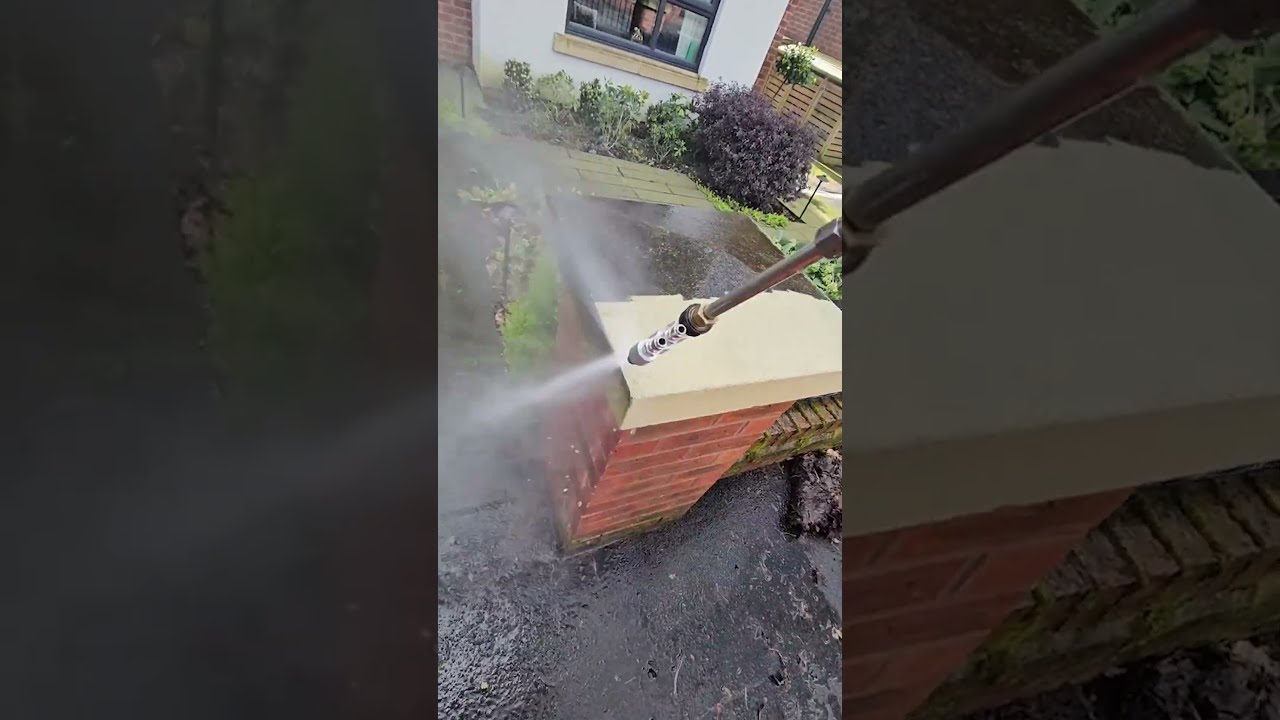
Practical Ways to Reduce Water Use
- Sweep first: Remove loose soil, leaves and grit before introducing water.
- Clean only what needs cleaning: Spot-clean isolated marks rather than washing an entire driveway unnecessarily.
- Use appropriate equipment: Match the nozzle, pressure and cleaning attachment to the surface.
- Release the trigger between passes: Avoid spraying while moving furniture or repositioning hoses.
- Treat stubborn contamination appropriately: A suitable cleaner, used according to its label, may reduce repeat washing. Do not let it dry on the surface.
- Maintain the machine: Repair leaks and replace worn nozzles that affect performance.
Mawson Lakes Water Rules and Runoff Management
Before arranging pressure washing in Mawson Lakes, check current SA Water advice on Water Wise Measures and any additional restrictions applying to your water supply. Do not assume that using a pressure washer automatically makes every outdoor cleaning activity permissible.
Some Mawson Lakes properties have recycled-water connections. Confirm permitted uses and equipment compatibility before connecting a pressure washer, and follow requirements for identifying and safely using recycled water.
Keep wash water containing detergent, oil, paint residue or sediment out of stormwater drains. These drains can carry pollution into local waterways. Depending on the job, drain protection, containment and wastewater recovery may be necessary. Check relevant SA EPA and City of Salisbury guidance for disposal requirements; a “biodegradable” cleaner is not automatically safe to discharge into stormwater.
Choose Surface Safety, Not Maximum Pressure
Excessive pressure can damage timber, loosen paving joint sand, strip coatings and mark concrete. Test a small, inconspicuous area first and use the lowest effective pressure. Older concrete, damaged paving and delicate finishes may need a different cleaning method.
When choosing a pressure washing service in Mawson Lakes, ask about flow rate, expected cleaning time, surface protection and runoff control. The most water-efficient approach achieves the required clean without unnecessary spraying, surface damage or polluted runoff.
Mawson Lakes Pressure Cleaning
Unit 7/12 William St, Cavan SA 5094
(08) 7282 0689